Saturday, December 25, 2010

We Are Not Modern – Comme Chez Soi – Brussels

At a recent conference on the convergences and divergences of food cultures – there actually are such funded academic gatherings – I argued that cuisines could vanish. While appearing robust, they are often, in reality, distressingly fragile. For dramatic emphasis I pointed to the remarkable disappearance of classic French cuisine, a cuisine that has gone from dominant to absent in less than half a century. Here was a cuisine that could never die, but did exactly that. Where can one find those wondrously heavy sauces that so admirably contributed to lowering life expectancies among the rich and powerful? The days of roux are done. Do diners dream of mirapoix? Grand restaurants in Paris – and New York – once ladled out the cream and the butter, and every well-made sauce was flour-based: the gluten-or–lactose intolerants were in the closet. Vegans had to live by a code of don’t ask, don’t eat.

Classic French cuisine was the venerated culinary style for over a century – the natural zenith of cuisine. But when it came crashing down with a push from Nouvelle Cuisine, a nudge from Gault-Millau, and a prod from the health police, the collapse of the caloric tower was total. Who cooks Escoffier today?

Some restaurants exist that are classic-lite – La Grenouille in New York is one – but their cuisine, as presented today, would be thin gruel for the beau monde in 1960.

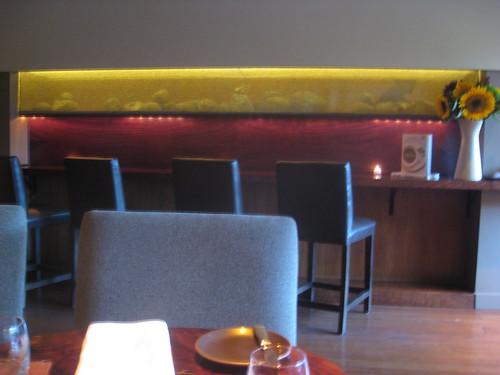
The night the conference adjourned, I found myself in such a restaurant, the double Michelin-starred Comme Chez Soi (“Just Like Home”), that reflects a classical-lite cuisine with all of its loving style and its drawbacks. Comme Chez Soi is a restaurant that abjures the sharp elbows of the contemporary style. Its heart is in the 1890s – along with its splendid Art Nouveau décor - even if the kitchen is producing a more contemporary version of a classical cuisine at which Careme might scoff. This is a restaurant that is run by the fourth generation of the Wynants family, a low country tradition. But it isn’t your granddad’s restaurant, even if it might wish to be. For many decades the restaurant was run by the great Belgian chef Pierre Wynants, and currently the kitchen is managed by his son-in-law Lionel Rigolet. Perhaps it is true that contemporary diners would rise in anger and disgust at the true classics, but such a claim reminds us that there are limits that you are what you eat. Sometimes dishes are unavailable: there are some culinary selves that we can not be.
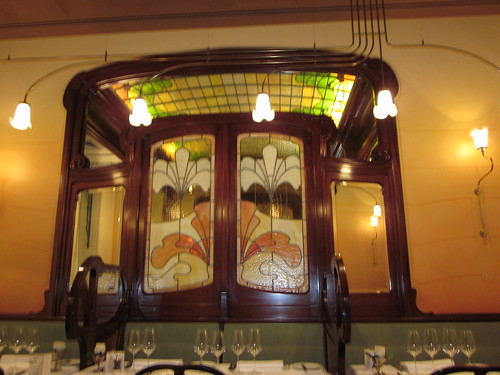
Comme Chez Soi - Brussels - December 2010

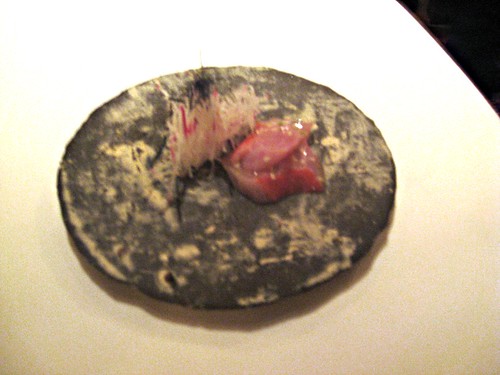
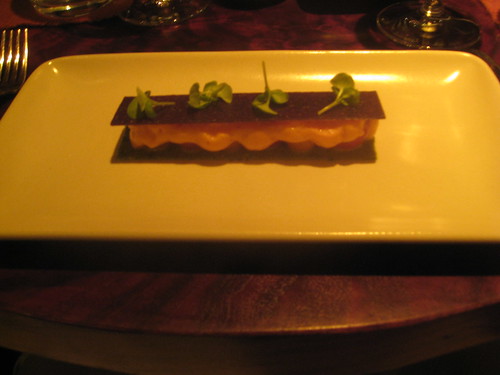
I began with a light amuse of crackers with pink peppercorns, nice and spicy if not particularly daring, and a much more engaging pair of smoked halibut mille-feuilles. The latter were classic in style and conception, but with enough drama and visual appear to keep any contemporary diner sated.

Comme Chez Soi - Brussels - December 2010 - Crackers with Pink Peppercorns and Smoked Halibut Mille-Feuilles

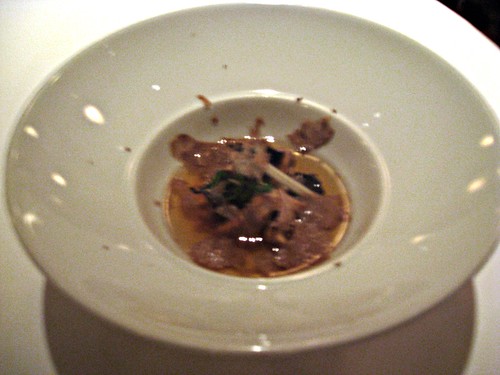
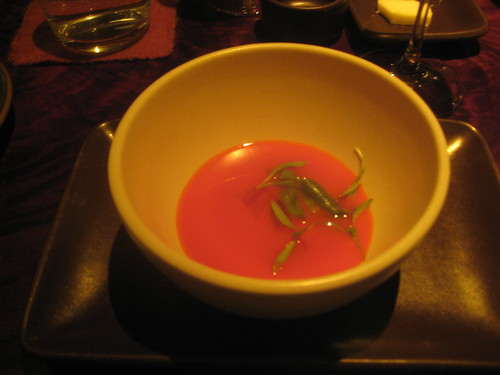
My second amuse was, in fact, a trio: the third, fourth and fifth tastes of the night. The best of the three was a warm geleed fish consommé with microdiced vegetables. Any classic restaurant must be skilled in stock, and Comme Chez Soi shines in the broth department (if broths can be said to have a department). Further, in this one could see the compulsion of the classic restaurant for dicing, mincing, and chopping: mirapoix as religion. I suddenly shuddered to realize that dicing has become a lost art in modern cuisine. When does one find knife skills today? Not often.

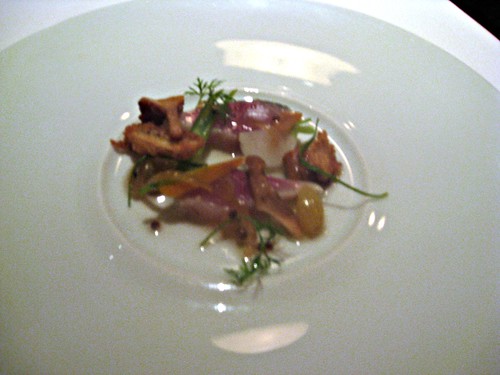
Mackerel with cucumber, marinated in yuzu, was also impressive, the only use of fruit on Comme Chez Soi’s menu. And even in Brussels, mackerel has made its mark. Every fish gets its fifteen minutes of fame, and this is mackerel’s turn. The third of the set Fried Crawfish with several dabs of a quasi-Chinese sweet sauce was a disappointing bite, reminding more of little more than a cheap and not very authentic Asian restaurant. Any restaurant that has linen napkins should be very cautious when considering investing in a deep fat fryer: grease does marry graciousness well.
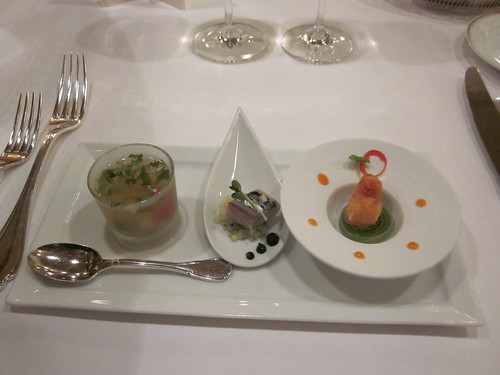
Comme Chez Soi - Brussels - December 2010 - Trio of Amuses: Warmed Gelled Fish Consomme, Mackerel with Cucumber, Fried Crawfish

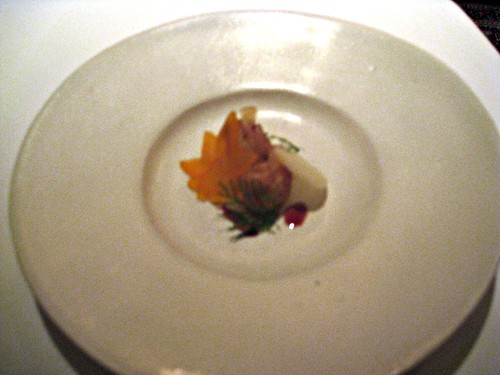
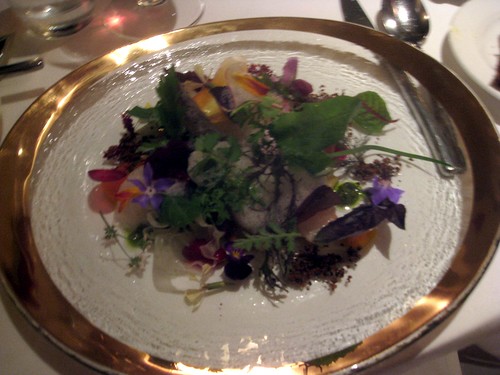
The first post-amuse dish, a carpaccio duet of Dublin bay prawns and lobster with lemongrass and raw minced gambas (shrimp) with ginger and lime, showed off Comme Chez Soi to its best effect. Here was a dish that revealed that mosaics were once a delight of the pampered diner. It was a jigsaw in spirit and in practice. While the lemongrass lent the plate a modern twist, the twist was simultaneously discreet and effective. It was restrained and classic, but very intriguing. CCS is traditional but not embalmed.
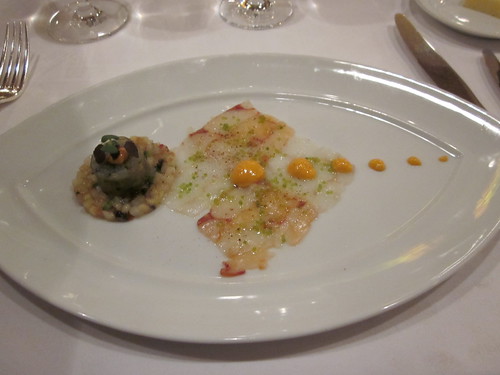
Comme Chez Soi - Brussels - December 2010 - Carpaccio of Dublin Bay Prawns and Lobster with Lemograss and Raw Minced Gambas with Ginger and Lime

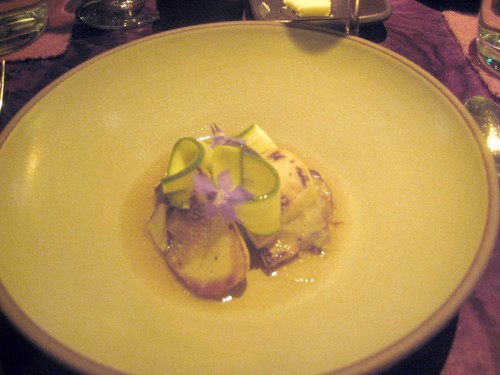
While it is not quite fair to term the second dish a soup, it revealed again the height of broth. I was served steamed dab with snails from Namur, bouillon with shiitake and Chinese chives. The flavors were rich and the presentation restrained. Perhaps the dab was cooked more fully than one would find at Le Bernardin, but it was moist and rich and happy in its little ocean.
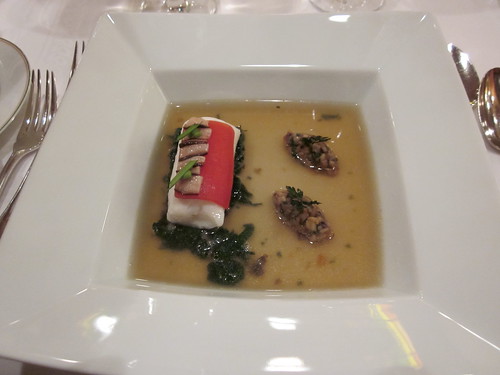
Comme Chez Soi - Brussels - December 2010 - Steamed Dab with Namur Snails, Bouillon With Shiitake and Chinese Chives

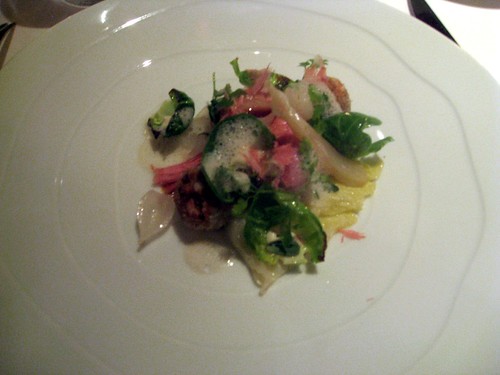
Scallops with Puy lentils and cucumber roll with Colchester flat oysters proved again to be properly restrained in the lite-classicism that I was learning to appreciate. CCS rarely challenges the diner with clashing tastes, and this was certainly true with this subtle dish. To be sure oysters and scallops are not usual partners, but neither are they oysters and blueberries. The restaurant as current style demands provides a dollop of light sauce, a well-made accompaniment.
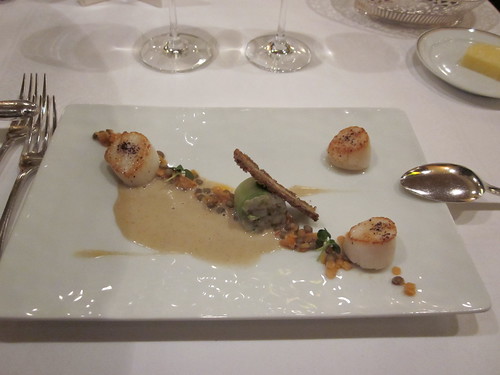
Comme Chez Soi - Brussels - December 2010 - Scallops wiht Puy Lentils and Cucumber Roll with Colchester Flat Oysters

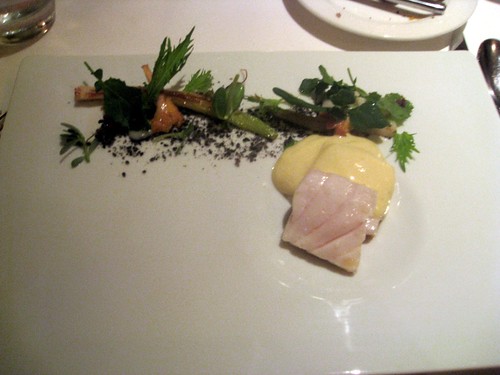
The greatest disappointment of the evening was the main course of roasted halibut with Chiloë peppers and king crab, smoked emulsion of parmesan and old balsamico. Halibut has a strong and “fishy” taste, and can easily be overcooked. By overcooked, I don’t mean inedible, and I did not return the dish, but lacked appeal, even when set off by the balsamic sauce. Visually it was subtle, but lacked a spark on the keyboard of taste.
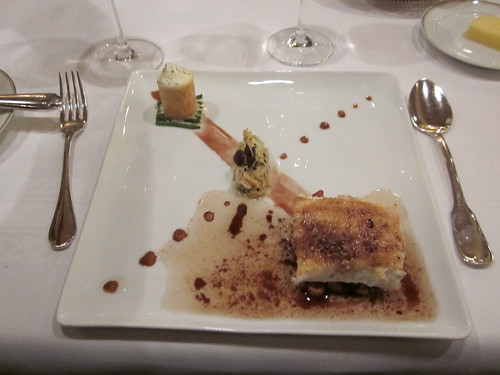
Comme Chez Soi - Brussels - December 2010 - Roasted Halibut with Chiloe Peppers and King Crab, Smoked Emulsion of Parmesan and Old Balsamico

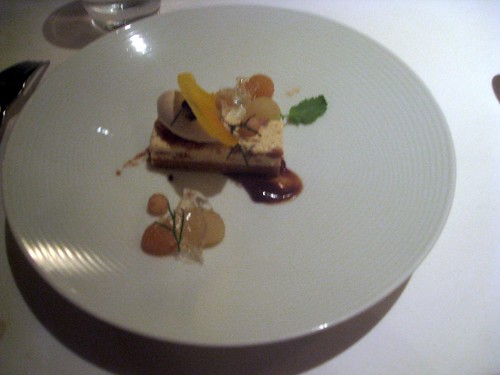
The first dessert, “pear with multiple flavors,” was close to the contemporary style with a set of plated thematic mini-desserts. I particularly enjoyed the pear ice cream and “Poire William” soup with its brandied kick. While it was not as startling or as deconstructed as a fully modernist dessert, it revealed the possibilities of pear.
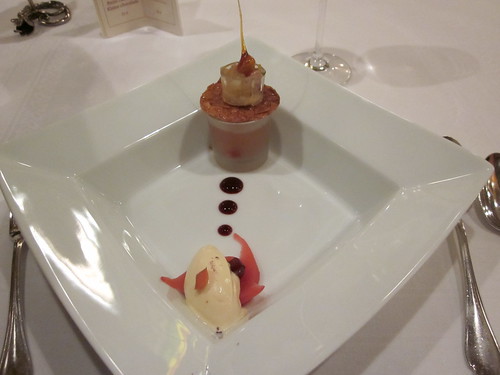
Comme Chez Soi - Brussels - December 2010 - Pear with Multiple Flavors

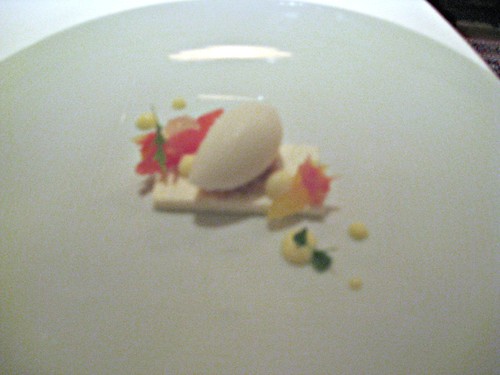
The final scheduled dessert emphasized chocolate and coffee, but as I avoid caffeine, I pleaded for a fruity exchange, and I was graciously blessed with the highpoint of the evening: a fully classic Lime Soufflé with Lime Sorbet. Nothing adventuresome. Just a perfect presentation of a canonical dish. Yum. When done right, the oldies are still goldies.
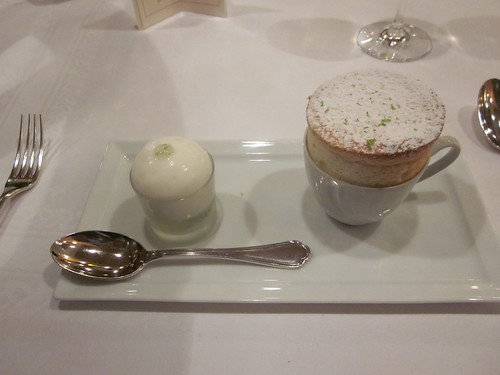
Comme Chez Soi - Brussels - December 2010 - Lime Souffle with Lime Sorbet

Given current styles, it is hard to suggest that Comme Chez Soi is an essential restaurant. Yet, I would mourn if it disappeared. In its restrained classicism, served in a striking Art Nouveau dining room, it is graceful and loving. Perhaps the main course disappointed, but most of the dinner captivated me, revealing the pleasures of restaurants from the days when I started my trek through the culinary forests. But, I wonder, could a restaurant in thrall to Escoffier survive the footfalls of modernism? Can a restaurant, in sympathy with anthropologist Bruno Latour, shout that “we are not modern” and survive?

Comme Chez Soi
Place Rouppe 23
Brussels, Belgium
02-512-29-21
http://www.commechezsoi.be/

Friday, December 24, 2010

Loaves and Fishes – Le Bernardin – New York

Nearly twenty years ago I had one of the most splendid and memorable meals of my life at Le Bernardin. As it happened, and although we did not realize it at the time, it was the last restaurant meal that I had with my father who died soon afterwards and whose given name was Bernard. How is that for irony! To be sure the circumstances of that meal cast a somewhat nostalgic glow on all that fish, but we both knew immediately how wonderful the meal was. Chef Eric Ripert had recently arrived at Le Bernardin, still working with Gilbert Le Coze.

Some fifteen years later I finally returned on my own dime: Dismay ensued. Chef Ripert was not in the kitchen that night and he had his mind on other matters (he was consulting on a failed restaurant opening). There were some astonishing dishes (a flight of raw fluke, for instance), but one dish was so overcooked that I returned it to the kitchen, caught between embarrassment and anger, perhaps the only time I have done that at a restaurant of serious mien. The expeditor had apparently gone AWOL. Other dishes were not brilliant either. And, as I noted at the time, the bread was cold and stale, which, when returned to the table, was presented warm and stale.

Five years later I returned. And Chef Ripert’s mind was now firmly focused on the plate: my wife and I were delighted with our choices, although as seems generally true at Le Bernardin, the less that the seafood is heated, the better for all concerned. Still before I discuss the courses, the great and embarrassing failure of Le Bernardin is still their bread service. Unlike most grand restaurants, they do not bake their own bread, and it shows. The bread was a notch above the slabs from five years back, but they were still mediocre and some slightly stale. When one compares the bread service with Per Se or Jean-George, well, one cannot compare the bread service. Think Olive Garden. Perhaps Chef Ripert believes that we should all live gluten-free.

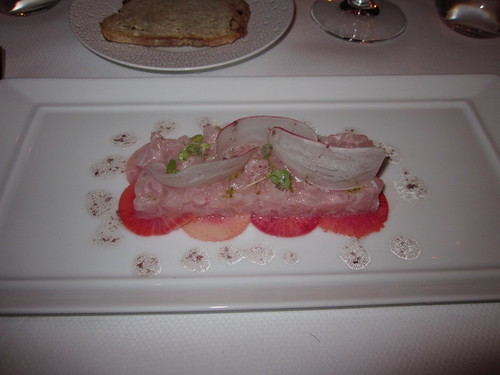
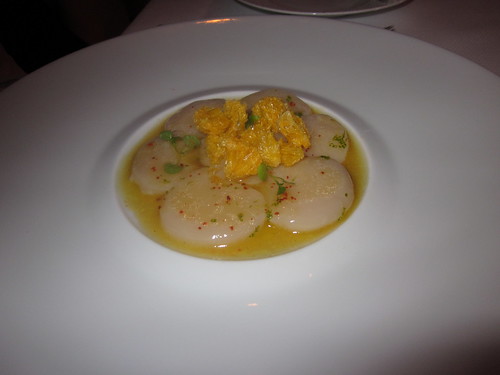
The pictures tell the story: here is a chef who creates exquisite compositions with raw or barely warmed fish – oceanic and from the shell. The striped bass tartare with a watermelon radish carpaccio was a delight for all those who love radish (my father did and he passed that passion on). The scallop slivers with mandarin puffs and scorched lemon were a nearly perfect composition of sweet scallop and tarted-up citrus.

Le Bernardin - New York - December 2010 - Striped Bass Tartare, "Watermelon Radish Carpaccio," Mustard Oil, Red Dulce Seaweed Vinaigrette

Le Bernardin - New York - December 2010 - Scallop Slivers, Mandarin Puffs and Scorched Lemon, Rosemary Vinaigrette

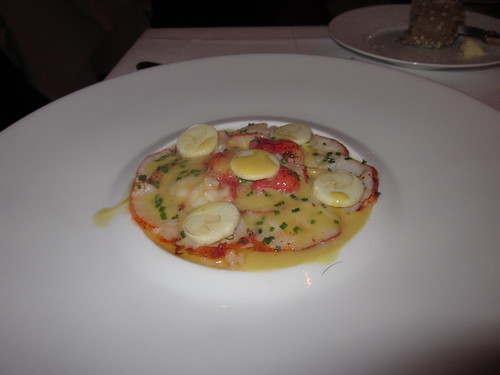
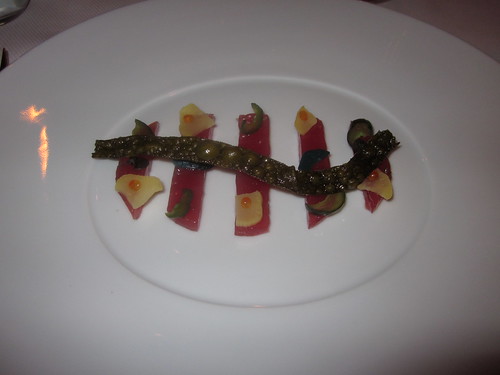
Much the same could be said of the warm lobster carpaccio, hearts of palm and orange vinaigrette. Perhaps Chef Ripert overuses vinaigrette (although that serves to preserve the fish), but each dish stands on its own. The smoked yellowfin tuna “prosciutto” was stunning visually and compelling as an artwork for the mouth. Here is sashimi with a Gallic accent.

Le Bernardin - New York - December 2010 - Warm Lobster Carpaccio, Hearts of Palm, Orange Vinaigrette

Le Bernardin - New York - December 2010 - Smoked Yellow fine Tuna "Prosciutto", Japanese Pickled Vegetables and Crispy Kombu

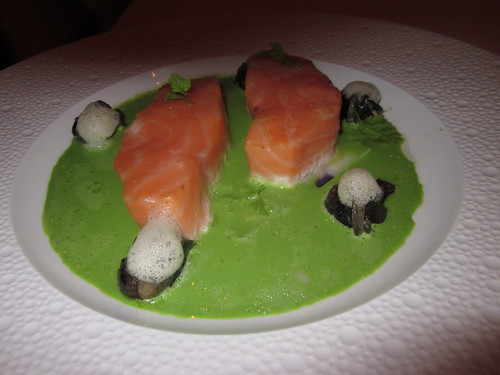
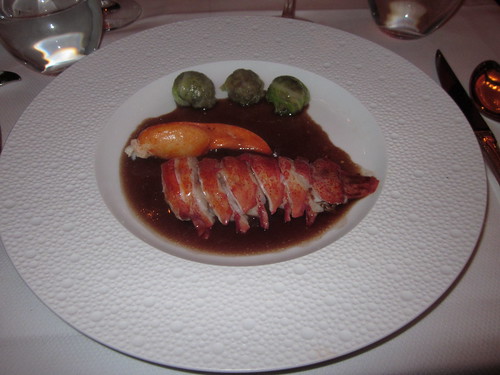
Slightly – but only slightly – less successful was the barely cooked wild salmon with braised burgundy snails, heirloom potatoes, and pernod scented sauce. I felt that the combination was a little less than brilliant, but each ingredient worked on its own terms. Baked lobster with mole puree was not as strongly flavored as I expected, but at least the good, clean lobster was not overwhelmed.

Le Bernardin - New York - December 2010 - Barely Cooked Wild Salmon, Braised Burgundy Snails, Heirloom Potatoes, Sweet Garlic Parsley, and Pernod Scented Sauce

Le Bernardin - New York - December 2010 - Baked Lobster, Mole Puree, Stuffed Baby Cabbage and Bacon Bordelaise

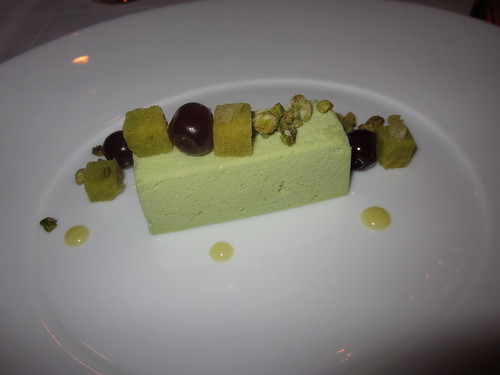
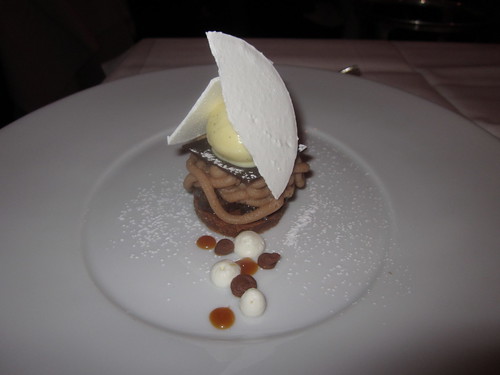
Desserts were appropriately modern, if less memorable than the raw seafood. Pistachio mouse with caramelized white chocolate was pleasantly architectural, and the chestnut mousse was well-prepared and echoed with the baked chestnuts being sold by winter vendors on New York streets. But one does not dine at Le Bernardin for the dessert.

Le Bernardin - New York - December 2010 - Pistachio Mousse, Caramelized White Chocolate, Lemon, Bing Cherry

Le Bernardin - New York - December 2010 - Chestnut Mousse

Chef Ripert cooks in a modern style, but without the experimental techniques that one sometimes found at L20 under the leadership of Laurent Gras (Gras’ seared foie gras with cotton candy and bee pollen is a dish as memorable in its own way as Tom Keller’s Oysters and Pearls). Still, at Le Bernardin there was a commitment to quality this night as there had been some two decades back.

I understand from the proficient staff that the dining room will be restructured and revamped, and that some recognize that the bread service is not up to par (I hope that the chef is included in this worried minyan). I rather like the dining room, but in this Christmas season, let us not forget the miraculous pairing of loaves and fishes.

Le Bernardin
155 West 51st Street
New York
212 – 554 - 1515
http://www.le-bernardin.com

Sunday, November 21, 2010

Chef in Translation – Manresa 2.0 – Los Gatos, CA

My second visit to Manresa, Chef David Kinch’s highly esteemed restaurant in Los Gatos, occurred less than two weeks after the first, and in culinary style, it was as if Manresa had suddenly hired a new chef. But no. When one dines at a serious restaurant with a brilliant chef, a critic attempts to draw a bead on how this artist defines gastronomy as evidenced by what he chooses to put on the plate.

My first visit to Manresa was characterized by a vibrancy that owed much to Parisian and Catalan styles as filtered through California light. Diebenkorn on a dish. I was particularly impressed by Kinch’s version of the Arpege egg, his experimental Elemental Oyster, a poached oyster made to taste raw, his Catalan (and Italian) inspired Rack of Veal Tonnato. Even the dish that I rejected – Butterfish in a Yuzu Sabayon – had no Asian tranquility, but was all jangly and nervy, despite its ingredients.

But this second evening was a different matter. We asked Chef Kinch to cook for us, and twenty-one courses later we were sent packing. (Given my complaint with my first meal, I am obliged to note that the timing was impeccable on this Saturday night – and I have come to admire Manresa’s smooth and elegant design, even if it has none of the New York glass, high-modern style, and bluff).

I do not cover each of the dishes of the evening, but the menu consisted of six amuses, ten savory courses, and five sweets. One should note the symmetry of the first and final two courses. The petit fours and gels (Red Pepper/Black Olive; Strawberry/Chocolate) were identical twins separated at birth: both engaging and delicious as hand-to-mouth bites. The beignets were less of a precise match, but contrasted savory and sweet. The cream beignet with a “dairy cup” of condensed milk ice cream was one of the two most persuasive desserts.

Amuses
Petit fours “Red Pepper-Black Olive”

Garden Beignets, Vinegar Powder

An Elemental Oyster (image in a previous post)

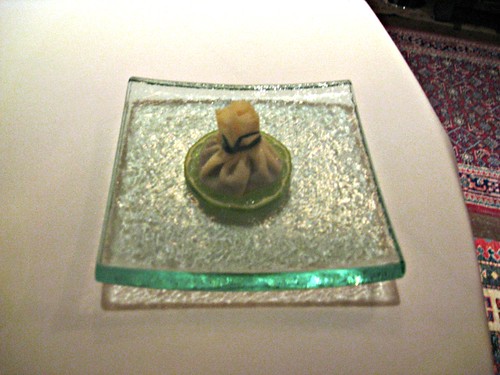
Caviar Beggar’s Purse
Manresa - Los Gatos, CA - November 20, 2010 - Caviar Beggar's Purse

Spot Prawn Roe Tempura
Manresa - Los Gatos, CA - November 20, 2010 - Spot Prawn Roe Tempura

Raw Milk Panna Cotta, Abalone
Manresa - Los Gatos, CA - November 20, 2010 - Raw Milk Panna Cotta with Abalone

Savory Courses
Geoduck Clam in Apple and Seawater
Manresa - Los Gatos, CA - November 20, 2010 - Geoduck clam in apple and sea water

Golden Butterfish, Sashimi Style, Citrus and Olive Oil
Manresa - Los Gatos, CA - November 20, 2010 - Golden butterfish, sashimi style, citrus and olive oil

Mushroom Broth and Black Tea, Dried Tuna
Manresa - Los Gatos, CA - November 20, 2010 - Mushroom Broth and Black Tea, Dried Tuna and Truffles

Golden Raisins and Vegetables, Pickled With Mackerel
Manresa - Los Gatos, CA - November 20, 2010 - Golden Raisins and Vegetables, Pickled with Mackerel

Autumn Fruit with Jasmine Tea, Bay Scallops, Pumpkin Seed Oil
Manresa - Los Gatos, CA - November 20, 2010 - Autumn Fruit with Jasmine Tea, Bay Scallops in Pumpkin Seed Oil

Into the Vegetable Garden
Manresa - Los Gatos, CA - November 20, 2010 - Into the Vegetable Garden

Asian Pear with Celtuce, Beach Herb Vichyssoise
Manresa - Los Gatos, CA - November 20, 2010 - Asian pear with Celtuce and Beach Herb Vichyssoise

Spot Prawns on the Plancha, Spiced Pumpkin
Manresa - Los Gatos, CA - November 20, 2010 - Spot Prawns on the Plancha with Spiced Pumpkin

Black Bass with Walnut Oil, Wild Watercress
Manresa - Los Gatos, CA - November 20, 2010 - Black Bass with Walnut Oil and Wild Watercress

Roast Duck with Cabbage and Dates and Riesling
Manresa - Los Gatos, CA - November 20, 2010 - Roast Duck with Cabbage and Dates

Sweet Courses
Banana Roast in Passion Fruit Caramel, Shiso Crumble
Manresa - Los Gatos, CA - November 20, 2010 - Banana Roast in Passion Fruit Caramel, Shiso Crumble

Frozen Cream Cheese, Citrus and Lime Curd
Manresa - Los Gatos, CA - November 20, 2010 - Frozen Cream Cheese, Citrus and Lime Curd

Orange Sable Millefeuille, Coffee and Chicory
Manresa - Los Gatos, CA - November 20, 2010 - Orange Sable Millefeuille, Coffee and Chicory

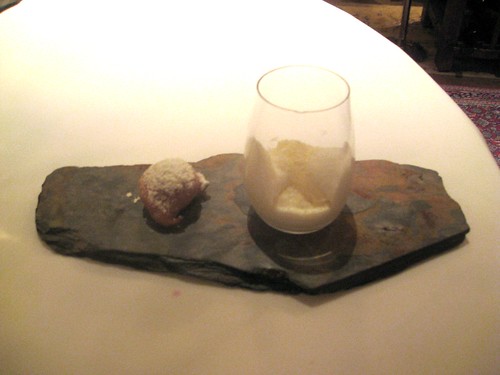
Muscovado Sugar Beignets with Condensed Milk Ice Cream
Manresa - Los Gatos, CA - November 20, 2010 - Muscovado Sugar Beignets, "Dairy Cup" (Condensed Milk Ice Cream)

Petit fours “Strawberry-Chocolate”

While Kinch’s plates on my first visit were exuberant, these were hushed, subtle and seductive. Chef Kinch had recently spent several weeks in Kyoto and tonight it showed. Perhaps the change can be attributed to the difference between a Prix Fixe (dishes that are fixed in amber for the cooks to prepare – Greatest Hits) and dishes that are in process, tested through an elaborate tasting menu. Some of novice dishes tonight may in time be given starring roles.

But a few dishes were birthed from different traditions, notably the Vegetable Garden Salad, a dish in motion. This plate of greens is continually altered according to what is freshest in the Manresa garden: a chop suey of herbal cuisine. While I didn’t have the two salads to compare, I was struck by a few nicely bitter leaves that I didn’t recall from a few weeks back. Nature’s bounty is dynamic.

The Raw Milk Panna Cotta with Monterey Abalone was also an exuberant dish – profound and dramatic. (Milk and cream are used in several dishes, more European than Asian). This mix of the smooth, cool pudding with the chewy, oceanic abalone was a warm surprise and a success.

More inspired by Japanese traditions was the next act: Geoduck Clam in Apple and Seawater. The seawater was the liquid remains of the oysters as reconfigured by the kitchen. I often find geoduck chewy, but texture is crucial to Japanese cuisine, and the small pieces of clam were brightened and heightened by the water and the apple. It was not a dish that I would have chosen as a main course, but it was delightful for a few bites: a happy honeymoon of ingredients.

The mushroom broth was a firmly kaiseki dish: perhaps the most traditional of the evening (despite European shaved white truffles). No jangling here, but a mix of tuna, truffles, tea, and chanterelles. It was a dish that managed to display the best of the ingredients without having the chef’s shadow in the way.

Visually the autumn fruit with jasmine tea, bay scallops, and pumpkin seed oil was the dish that most reminded me of my visit to Kyoto, and it is a lovely jewel: Tokyo Tiffany. The plate sparkled without screaming, and the complexity of the small bowl more than made up for the fact that it was but a few bites – but rich and pungent bites. Tea, pumpkin, and scallops each have enough flavor without any shoving the others aside. Beautifully quiet, confidently composed.

In a similar way, although not as visually compelling, was the Spot Prawn Roe Tempura, which used ingredients to their very best effect. The spot prawns with pumpkin required that a diner digs the meat from the shell which made things a bit messy, but the combination of flavors and the challenge of the diner to be thought-filled made the effort memorable.

Who could not treasure the Asian pear with Celtuce (a Chinese lettuce) and Beach Herb Vichyssoise? Perhaps it owed much to the idea of the ingredients – just finding beach herbs must have been a challenge – but as a small soup I was glad to enjoy the effort of combing the oceanfront, bucket in hand.

The frozen cream cheese with citrus and lime curd was pretty on the plate and happily acidic on the tongue. Along with the beignets it was the star of the sweets.

The least successful dishes were the two main proteins. Roast duck with cabbage and dates was the type of contemporary dish that any well-trained modernist chef might have prepared, a bit of breast and a few spheres of accompaniments and a cabbage leaf. Competent, but edging to cliché. The weakest dish of the night was a zingless Black Bass with Walnut Oil and Wild Watercress. Borrring! Where is the hook? Time for a next course. Fortunately this pair of snoozers was no larger than their better cousins – and so could easily be forgotten.

So in 21 courses, no singular style fully characterizes Chef Kinch’s artistry, but tonight he strived to combine Catalonia, California, and Kyoto. His goal is my dream.

Manresa
320 Village Lane
Los Gatos, California
(408) 354-4330
http://www.manresarestaurant.com

Saturday, November 20, 2010

Buzzy – Coi – San Francisco

Few restaurants have generated as loud a buzz – positive buzz – as Chef Daniel Patterson’s San Francisco restaurant Coi, located in the somewhat scruffy North Beach neighborhood. But unexpected or not, the California-inspired modern cuisine at Coi has received a lot of admiring attention: it as if a hive of foodie bees had descended on the Embarcadero.

The restaurant itself is something of an oasis; it is neither luxe nor loud (Coi means quiet or tranquil in French), but bright, modest, slyly elegant, and pleasing, and service is forthcoming. And it is an establishment whose honeyed food always satisfies, although on the night that I dined only a few dishes stunned. This is only a complaint given the chatter that Patterson’s place generated. And, in truth, a few dishes were remarkable. One of my dining partners felt that the restaurant had, on that night, pulled back a bit from its more adventurous efforts. The restaurant is one of the most significant dining destinations in the Bay Area, a necessary culinary visit. And only one dish was less than very successful.

Coi, San Francisco - Interior

That dish was the first offering: Childhood Memory of Harvest: Vegetable Leathers, Apple, Nuts, and Pear Cider. It has become de rigueur for chefs to trade in nostalgia, sometimes for the best, sometimes not. Here the memory was Patterson’s. For this diner, fruit leathers have never been that appealing. I come from a generation in which these “healthy” snacks were not widely available for afternoon television surfing. I give Chef Patterson a ribbon for the best vegetable leathers that I have tasted, but prize is perhaps not worth much in the larger culinary scheme.

Coi, San Francisco - Childhood Memory of Harvest - Vegetable Leathers, Apple, Nuts, Pear Cider

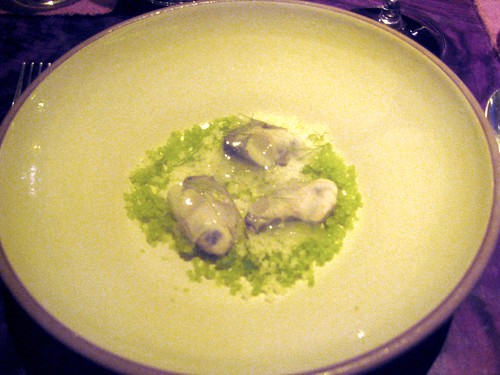
Fortunately this memory was quickly replaced by a gracefully cool and fresh plate of Marin Miyagi Oysters with wheatgrass and lemon ice. This was an amuse for the ages, designed to awaken all of one’s senses. It was complexity and simplicity on a plate, and was among the star presentations of the evening. Oysters can be difficult partners, but when treated well, they are sexy and profound.

Coi, San Francisco - Marin Miyagi Oysters, Wheatgrass, Lemon Ice

The inverted cherry tomato tart with a black olive basil wafer was an elegant architectural construction: precisely prepared. If it didn’t jangle or provoke, it was a very happy savory tart. Perhaps it was more an assertion of the builder’s art than the chef’s, but the tastes were Californian and right.

Coi, San Francisco - Inverted Cherry Tomato Tart, Black Olive, Basil

Chilled Piquillo Pepper Soup with fresh pole and shelling beans, preserved lemon, and cilantro was another highpoint. It was slightly gelatinized (is that a word?) and so vibrant in visual appeal that its hue could play off its tang. This soup was not Progresso, but Progressive.

Coi, San Francisco - Chilled Piquillo Pepper Soup with Fresh Pole and Shelling Beans, Preserved Lemon, Cilantro

Monterey Bay Abalone Grilled on the Plancha with Nettle-Dandelion Salsa Verde, Spicy Breadcrumbs and Wild Fennel Flowers might have nodded too deeply to the idea of the wild. Here I was particularly impressed by the textures which were challenging and exciting with each bite.

Coi, San Francisco - Monterey Bay Abalone Grilled on the Plancha, Nettle-Dandelion Salsa Verde, Spicy Breadcrumbs, Wild Fennel Flowers

At this point, we were served an off-the-menu soup: Late Summer Squash with Borage. Patterson’s second soup was impressive if less exciting than the first soup of the evening.

Coi, San Francisco - Late Summer Squash Soup with Borage

Do diners dream of beet charcoal? I do. Our most memorable dish was Wild Black Cod Smoked over Beet Charcoal (beet charcoal?) with Creamed Leeks, Beet-red Flame Grape Sauce, and Horseradish Dill. Who knew that I would love a presentation that couldn’t be beet? Perhaps it was the smoked and rooted flavor of the cod that seduced, or perhaps it was a visually stunning plate or an amazingly moist aquatic protein. Everything worked in synergy, and I bang my head on my computer screen for lacking the photographic skills to show you my love in her deep red lipsticked grandeur.

Coi, San Francisco - Wild Black Cod Smoked Over Beet Charcoal, Creamed Leeks, Beet-Red Flame Grape Sauce, Horseradish Dill

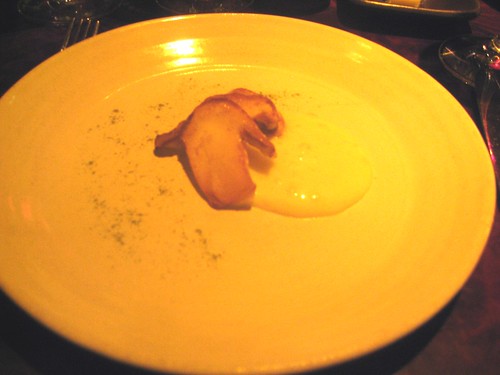
Pan-Grilled Matsutake with Potato-Pine Needle Puree was a quiet contrast to the cod. I never have understood why Japanese gourmands count Matsutake as so favored a fungus: I will take King Bolete. The Matsutake and pine was well prepared, tasting like a walk among damp conifers.

Coi, San Francisco - Pan Grilled Matsutake, Potato-Pine Needle Puree

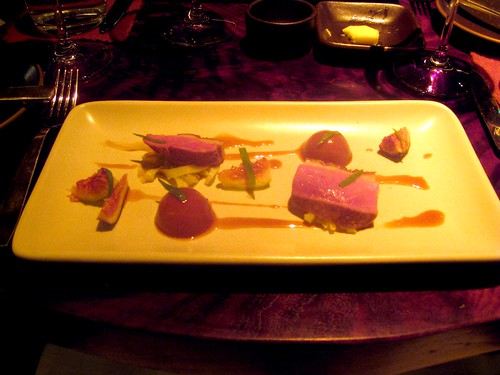
The main protein was Poached and Seared Duck Breast with Foie Gras Ganache, Figs, Angelica Root, and Tarragon. I have tired of those dishes that are a little of this, a little of that. A smorgasbord rather than a symphony. Yet, it is the style. Each point of light on the plate was well-prepared, but the dish seemed more straight-forward than astonishing.

Coi, San Francisco - Pached and Seared Duck Breast, Foie Gras Ganache, Figs, Angelica Root, Tarragon

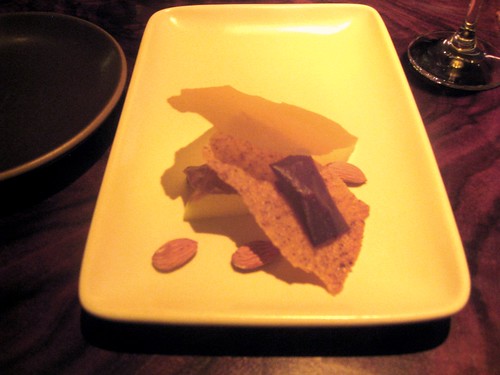
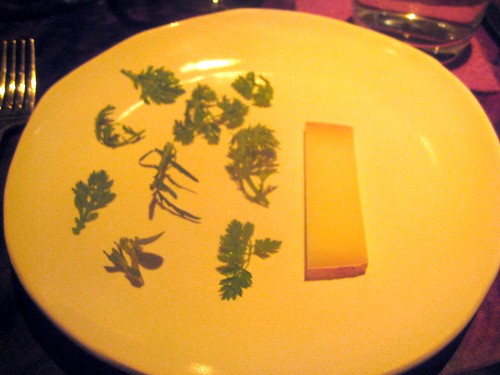
Our cheese – Tomme D’Ossau with Late Summer Greens – was the artistic presentation of a fine slab of curd.

Coi, San Francisco - Tomme D'Ossau with Late Summer Greens

The Cheesecake with Goat Cheese, Graham Cracker, and Niabell Grape was a powerful sweet. Both the goat cheese and the grape added muscle to the creamy cake. It was the more striking of the two desserts.

Coi, San Francisco - Cheesecake, Goat Cheese Ice Cream, Graham, Niabell Grape

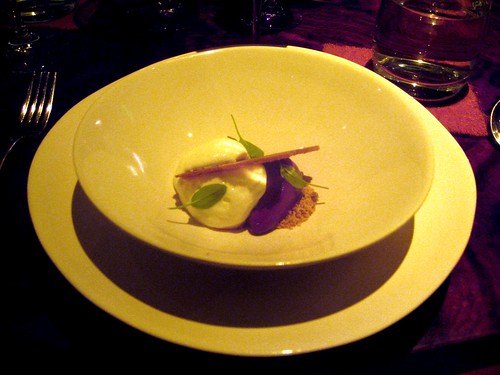
Cinnamon Smoked Apples with Iced Buttermilk, Hazelnut, and Sorrel was a worthy closing, although perhaps too accessible – more North Platte than North Beach. I could eat such a pleasure, but I would doubtless select a more challenging sweet.

Coi, San Francisco - Cinnamon Smoked Appples, Iced Buttermilk, Hazelnut, Sorrel

So, Coi was a success: a four star restaurant for certain. Several dishes were wonderful, and the cod and the oysters were memorable. If it didn’t quite live up to the buzz, we should blame the buzz and not the chef. Chef Patterson is a man of enormous talent and creativity. With his left coast garden perhaps there is no stopping him.

Coi
373 Broadway (North Beach)
San Francisco
(415)393-9000
http://www.coirestaurant.com

Saturday, November 13, 2010

Manresa 1.0 – Los Gatos, California

Everyone foodie needs a goal in life, if for no other reason than to keep him off the streets. And so during my year in Silicon Valley (Palo Alto, actually), I made a commitment to myself to visit Manresa once a month: for a total of ten visits. Who knows whether, in fact, I will meet my goal, but it surely counts as a caloric packed Jewish New Year’s resolution. Although I have started off slowly (on a month-by-month basis I should be at my third visit), I hope to ramp up soon. I expect to eat through the menu, although I have no doubt that the menu will change to extend my mad dash. (If we were talking about Moto, I could not only eat through the menu, but eat it as well).

It can be debated – endlessly with gustatory gusto – which Bay Area restaurant is the most definitive or the most delicious (not precisely the same question). This is a metropolitan area that sports the French Laundry, Chez Panisse, Gary Danko, and Coi. Countless other restaurants have their own virtues. But there are many partisans for Manresa, David Kinch’s establishment in Los Gatos, which, among its many virtues, includes the avoidance of San Francisco’s traffic.

Of all of the Bay Area’s restaurants, it is Manresa that perhaps owes the most to European (especially Spanish, especially Catalan) cuisine, although Chef David Kinch has the California’s love for all things herbal, vegetative and fructifying.

Manresa as architecture is pleasant, although not startling. The design doesn’t pretend to knock one out, and, in truth, it could house a restaurant deserving one, two, three, or four stars – or perhaps none at all. To say that it is upscale generic is not to suggest that it is corporate. But it lacks the attention to architectural theatrics that one finds at Alinea or Bouley. At Manresa one does not lick the walls, just the plates. The attention is on the food.

Perhaps what I will enjoy most in my essays is finding points to criticize this essential and compelling restaurant. This is the critic’s right and, frankly, his pleasure. This first night – a Sunday – my colleagues and I selected the four course menu. As we moved through the night, I was glad that no one in our party was dieting or that no one was rushed. The dinner became ten courses (some of the extras may have resulted from a friend’s phone call), and spread out longer than four hours. I confess that there will be no objections from this scribe to four amuses (that is a lot of amusement, comparable to Duck Soup or Babette’s Feast), a substantial palate cleanser, and a brief dessert. And it is not the four hours that was at issue. Still, we were surprised at the pacing of the dinner. If four courses last four hours, does David provide PJs for the tasting menu? We were surprised at the gaps between the courses. The amuses were delivered quite expeditiously, but the spaces between the prix fixe courses left much time for conversation. Aside from the pacing, service was very agreeable and we appreciated the wine suggestions of the sommelier: two very food-friendly wines.

My second complaint was an unbalanced dish that I describe subsequently.

I will not spend much time describing the amuses and other extras, but no account of Manresa would be complete without mention of the poached oyster with seaweed and the Arpege egg, an homage to Alain Passard. The former is a marvel of culinary technology, a cooked oyster, designed to taste raw, almost. Chef Kinch was able to capture the fulsome quality of the oceans, particularly the essence of seaweeds that accompanied the dish.

Manresa - Los Gatos, CA - November 7, 2010 - Poached Oyster with Seaweed

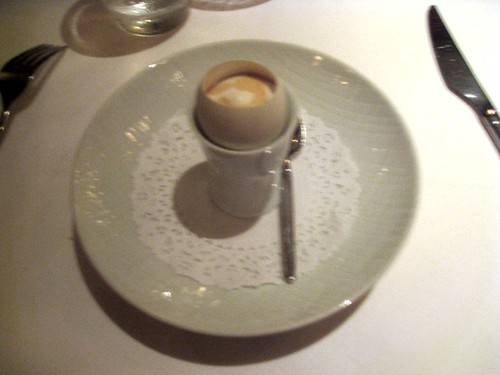
I have not eaten at Arpege – sad moi! – and so I cannot claim any expertise as to whether this yolk compares, but of all of the dishes served it was the most luxuriant and astonishing. The hot-cold soft-boiled egg mixed with cream, maple syrup, and sherry vinegar. The warm egginess is set apart with sour’n’sweet. It is a canonical dish that deserves, like the greatest musical composition to be reprised frequently in culinary concert halls.

Manresa - Los Gatos, CA - November 7, 2010 - Arpege Egg

For this first meal, I asked our server (Bryan) to suggest the most “typical,” or perhaps archetypical, dishes of the Manresa collection. The dishes were not the ones that I would have ordered from the menu, but I wanted to learn how the restaurant (or at least one of their servers) conceived themselves.

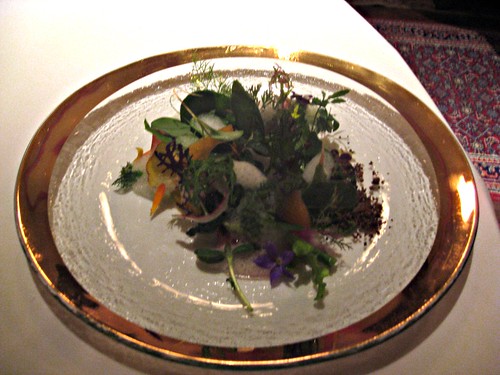
So I began with “Into the Garden . . . Their Natural Juices.” I expected a subtle, restrained dish like Town House’s Vegetable Minestrone. I could not have been further from the mark. Chef Kinch’s salad was a herbal kitchen sink. It had everything that one might imagine, prepared in incredible ways. It looked like an exploded mixed salad, but it tasted like a jazz combo. There were soils, bubbles, foams, leafs, and shoots. If the goal of modern cuisine is the make each bite an experience and to permit interaction with one’s food, this salad succeeded brilliantly.

Manresa - Los Gatos, CA - November 7, 2010 - Into the Vegetable Garden . . . Their Natural Jices

I promised a criticism, and my second dish is the place. Chef Kinch does not produce laid back cuisine, but why did he have to beat a yuzu drum? I was served butterfish slowly roasted with chanterelles, baby leeks, herbs, and yuzu sabayon. While the butterfish was as buttery and perfectly prepared as advertised, and the chanterelles were welcome, they were overwhelmed by an astringently pushy yuzu sauce. I was astonished by how dominant – how hegemonic – that yuzu was, and I have to wonder whether it was poorly made or deliberately intense. This was sabayon with sharp elbows. I have argued that food need not taste good to be artistic, but this dish seemed something other than serving glass shards to add the taste of blood. After a bite or two I tried to wipe away the sabayon. Perhaps a salmon or mackerel might have stood up to the blows, but not poor little butterfishy.

Manresa - Los Gatos, CA - November 7, 2010 - Japanese Butterfish Roasted Slowly with Chanterelles, Yuzu Sabayon, and Baby Leeks and Herbs

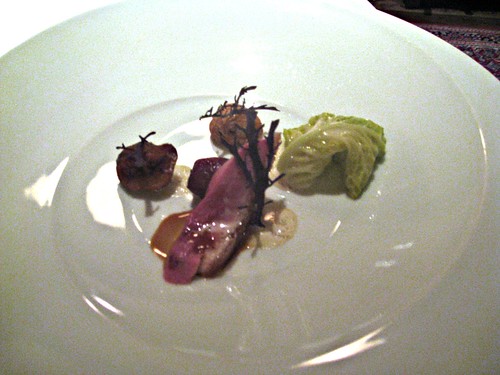
The third course put the meal back on track: slow roasted rack of veal “tomato,” cabbage with sweet onion and porcini fritter: a Manresa specialty. The label rack of veal was misleading as no rack was in sight. What was served was delicious enough, veal off the bone, cooked as tuna might. Even though this was the main protein course, it had the style of a grand salad, and, with the exception of the amuses mentioned above, the star of the night.

Manresa - Los Gatos, CA - November 7, 2010 - Slow Roasted Rack of Veal "Tonnato," Cabbage With Sweet Onion and Porcini Fritter

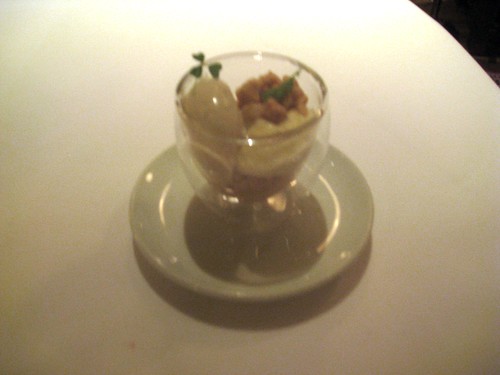
Dessert is prepared in the modern style, mix and match components: Pears and pumpkin cake with Speculaas (spiced cookie) ice cream with moscato jelly, prunes, dates, molasses and pecans. I enjoyed the dish thoroughly although my preference is for a dessert with a central focus: these days pastry chefs feel that rather than creating a single dessert, they create a dozen served on the same plate. Still, it was a successful autumnal sweet.

Manresa - Los Gatos, CA - November 7, 2010 - Pears and Pumpkin Cake with Speculaas Ice Cream, Moscato Jelly, Prunes, Dates, Molasses, Pecans

Chef Kinch deserves those plaudits ladled upon him. Manresa is a four-star restaurant. Yet, after this first meal, I am not quite sure where I would place it in the firmament of dining destinations. The veal “tonnato,” carnivalesque salad, poached oyster, and Arpege egg suggests brilliance. The pacing and yuzu extravagance less so. So with nine meals left, the grade is incomplete.

Manresa
320 Village Lane
Los Gatos, California
408-354-4330
http://www.manresarestaurant.com